
Open Cell vs Closed Cell Spray Foam: Why the Type Matters for Removal
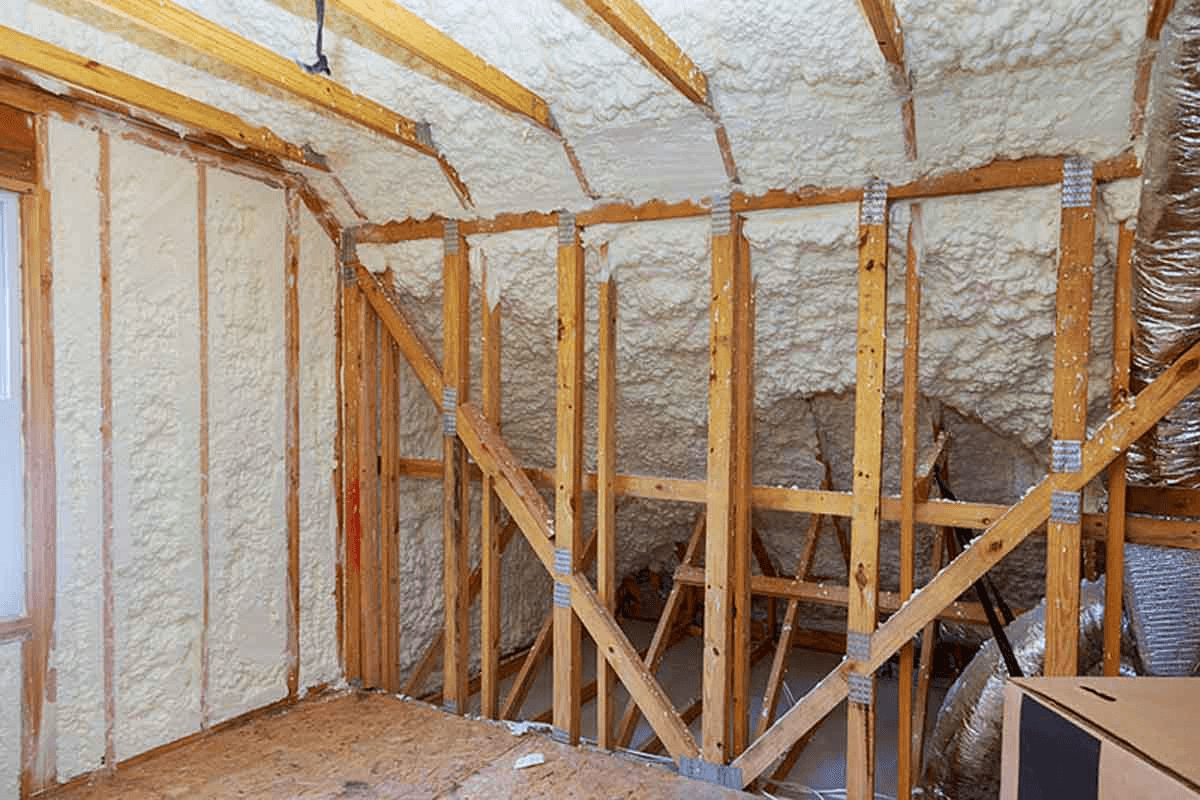
If you’ve been told you have spray foam in your loft and need it removed, you may have heard the terms ‘open cell’ and ‘closed cell’ mentioned by a surveyor or lender. The type of foam matters — not just for removal difficulty and cost, but for how quickly mortgage lenders require action and what the removal process involves.
Here’s a clear explanation of the difference and what it means for you practically.
What Is Open Cell Spray Foam?
Open cell spray foam is a softer, more flexible foam that expands significantly during application. It has a spongy texture, is usually off-white or pale yellow, and is breathable — meaning air and moisture can pass through it. It’s less dense than closed cell foam and was often used as a cheaper alternative for loft insulation.
From a removal perspective, open cell foam is generally easier to remove mechanically because it doesn’t bond as rigidly to timber surfaces. However, it does saturate into small gaps and around nails, fixings, and joints, which means full removal still requires care and specialist equipment.
Lenders’ concerns with open cell foam: because it is breathable, it can trap moisture against roof timbers over time, creating conditions for rot and deterioration. Surveyors cannot assess whether this has occurred without removing the foam first — which is why lenders flag it as a problem..
What Is Closed Cell Spray Foam?
Closed-cell spray foam insulation is a rigid polyurethane foam that is sprayed directly onto the underside of roof tiles or slates. Once applied, it expands and cures into a dense material that bonds firmly to the tiles, battens, and rafters, effectively sticking the roof covering to the structure.
Because of this strong bond, mortgage lenders often require the foam to be fully removed before approving lending, as it prevents proper inspection of the roof timbers and can hide issues such as rot, condensation damage, or structural deterioration.
If the foam has been sprayed directly onto the roof tiles or slates, it cannot be completely removed from inside the loft. Internal scraping only removes the foam from the rafters, but large amounts remain bonded to the tiles, battens, and underlay, meaning the roof structure cannot be properly inspected.
For this reason, lenders and surveyors often require external removal, where the roof covering is temporarily removed so the foam can be completely stripped away from the tiles, battens, and rafters. This allows the roof structure to be fully inspected and ensures all spray foam insulation has been removed.Does the Type Affect the Cost of Removal?
Yes — closed cell foam removal is generally more labour-intensive and therefore more expensive than open cell removal. The exact cost depends on the size of the property, the extent of coverage, and the access to the loft space. This is why an in-person survey is essential before any quote is given.
| Open Cell | Closed Cell |
Texture | Soft, spongy | Hard, rigid |
Colour | Off-white / yellow | Grey / cream |
Bonding strength | Moderate | Very strong |
Removal difficulty | Moderate | High |
Moisture risk | Trapping over time | Sealed in at application |
Lender concern level | High | Very high |
How Do I Find Out Which Type I Have?
The most reliable way is a physical inspection by a specialist. EcoTrust offers free surveys across Manchester, York, Birmingham, and North Wales. During the survey, the team will identify the foam type, assess the condition of the underlying timbers, and give you a clear picture of what removal involves and what it will cost.
If you have a surveyor’s report from a mortgage application, the report may already state the foam type. Look for the words ‘open cell’ or ‘closed cell’ in the loft section of the report.
Call EcoTrust on 0800 870 8086 to arrange a free survey — or use the form on our spray foam removal page to request a callback.